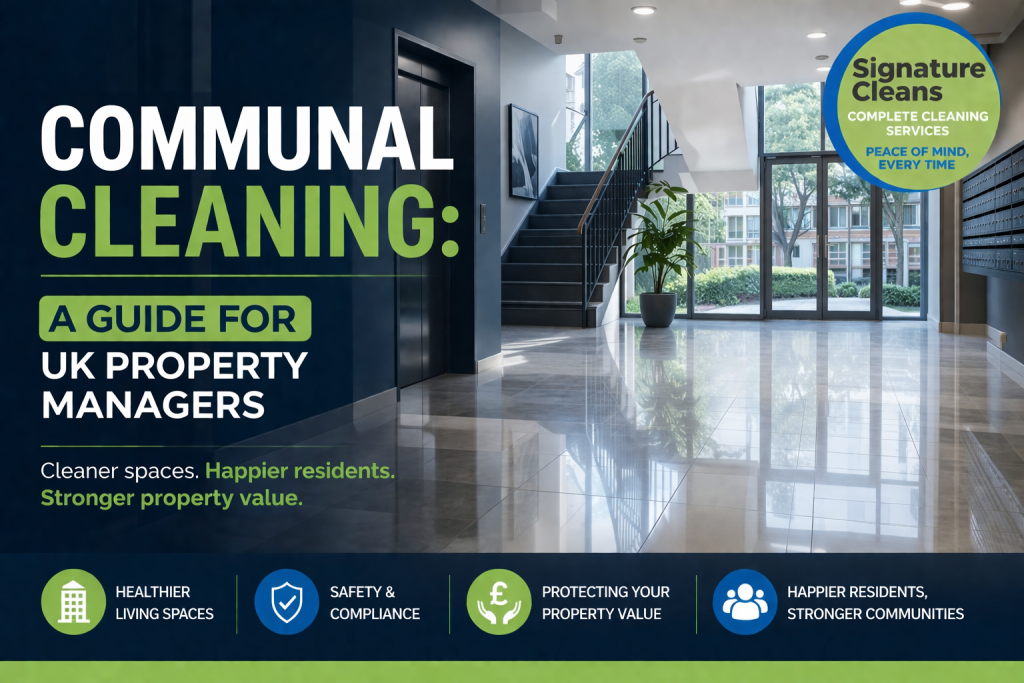
In the UK’s residential and mixed-use property sector, communal areas are often the most underinvested part of a building. They’re not anyone’s personal space, so responsibility for them can feel unclear. Yet they’re the spaces every single resident, visitor, and prospective tenant passes through — sometimes multiple times a day.
The condition of those shared spaces sends a powerful signal about how a building is managed. And that’s precisely why professional communal cleaning has become a priority for forward-thinking property managers, landlords, and residents’ associations across the UK.
What Counts as a Communal Area?
It’s worth being clear on scope, because communal areas vary significantly depending on the type of property. In a typical UK residential block or managed building, communal spaces include:
- Building entrances and lobbies — the very first thing anyone sees when they arrive
- Corridors and hallways — high-traffic areas that accumulate dirt quickly
- Stairwells and lifts — enclosed spaces where dust, litter, and odours gather fast
- Bin stores and recycling areas — often overlooked, yet a major source of odour and pest risk
- Shared laundry rooms or utility areas — used by multiple residents daily
- Car parks and external pathways — first seen before residents even enter the building
Each of these areas carries the same reputational weight. A gleaming lobby loses its impact if the corridor leading to the flats is tired and unkempt. Effective communal cleaning has to cover the full journey a resident or visitor takes through the building — not just the most visible parts.
Why First Impressions in Shared Spaces Matter so Much
There’s a well-established principle in property management: the standard of communal areas reflects the standard of the management itself. Residents notice when shared spaces are consistently clean and well-maintained. They also notice — and complain — when they’re not.
For landlords and letting agents, the stakes are particularly high. UK tenants increasingly factor the condition of communal spaces into their decisions about where to live and whether to renew a tenancy. A poorly maintained entrance or a malodorous stairwell can be the difference between a tenant staying or leaving — and a vacant property costs far more than a professional cleaning contract.
For residents’ management companies and leaseholders, clean communal areas also have a direct impact on property values. Surveyors and prospective buyers assess the upkeep of shared spaces as part of their evaluation. A well-maintained building commands stronger valuations and attracts higher-quality buyers.
What Professional Communal Area Cleaning Involves
The difference between a basic tidy and a professional clean is significant. A qualified cleaning team working in shared residential spaces will typically deliver:
- Hard floor cleaning and maintenance — mopping, buffing, or polishing depending on the surface type
- Vacuuming of carpeted areas — including stair treads and lift interiors
- Surface and handrail sanitisation — particularly important in post-pandemic property management practice
- Window and glazing cleaning — entrance doors, lobby panels, and communal windows
- Bin store maintenance — cleaning, deodorising, and ensuring the area is presentable
- Cobweb removal and light dusting — ceilings, light fittings, and skirting boards
- Litter picking and external upkeep — forecourts, pathways, and car park areas
Frequency should be matched to footfall. A small block of four flats has very different requirements to a 60-unit apartment development. A good cleaning provider will assess your building properly and recommend a schedule that keeps standards consistently high — whether that’s twice weekly, daily, or a combination of routine and deep cleans.
Choosing the Right Communal Cleaning Provider
Not every commercial cleaning company has the right experience for residential shared spaces. When evaluating providers, it’s worth asking:
- Do they have experience working in residential blocks or managed buildings?
- Are they fully insured for work in occupied residential properties?
- Can they provide a tailored schedule rather than a one-size-fits-all package?
- Do they offer both routine maintenance visits and periodic deep cleans?
- Will they communicate proactively if they spot maintenance issues — such as damaged fixtures or signs of damp?
That last point is worth highlighting. A professional cleaning team visits your building regularly and becomes familiar with its condition. The best providers act as an extra set of eyes on the ground, flagging issues before they become costly problems.
A Cleaner Building is a Better-managed Building
Investing in professional communal cleaning isn’t just about appearances. It’s about demonstrating that a building is actively managed to a high standard — something that benefits residents, protects property values, and reduces the friction that comes with complaints, disputes, and high tenant turnover.
The shared spaces in your building are telling a story every single day. It’s worth making sure it’s the right one.