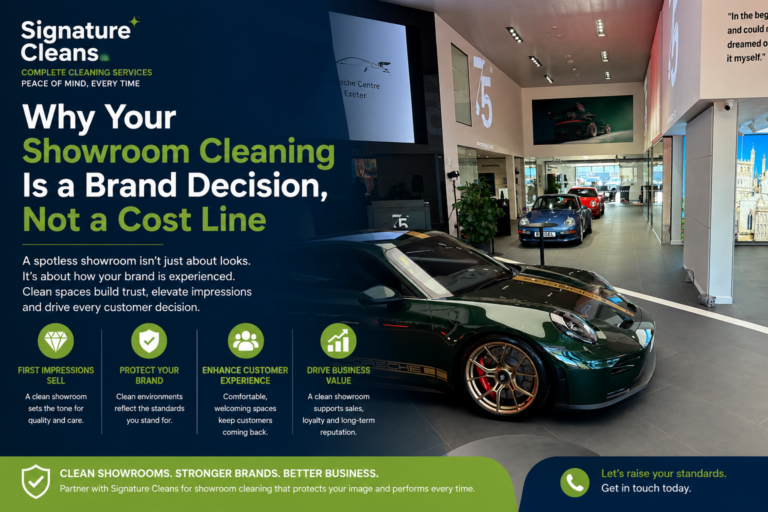
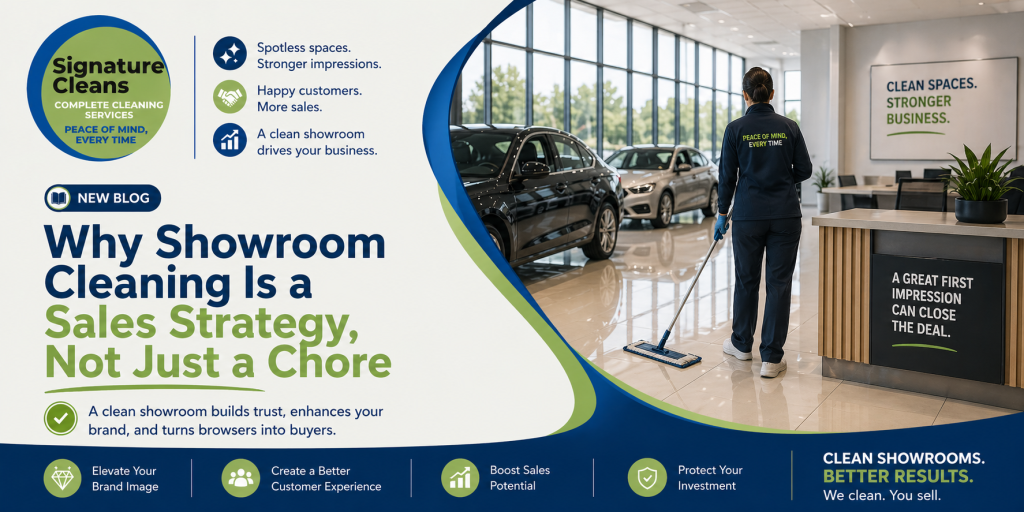
Car showroom cleanliness is part of the customer experience, not simply a maintenance task. From the moment someone approaches a dealership to the moment they collect a vehicle, the condition of the surrounding environment contributes to how the visit feels.
A polished display vehicle can lose some of its visual impact when surrounded by dusty glass, marked flooring or untidy customer areas.
For dealership managers in Exeter, the challenge is maintaining a consistent presentation across every customer touchpoint without disrupting sales activities.
This article explores how showroom cleanliness supports the customer journey, which areas deserve attention and how managers can assess presentation standards.
For detailed cleaning schedules and operational requirements, see our guide to car showroom cleaning in Exeter.
Why Showroom Presentation Matters to the Sales Experience
A car showroom is designed to present vehicles in a controlled retail environment.
Lighting, layout, signage, furniture and display positioning all contribute to that experience.
Cleaning plays a supporting role by helping those elements look as intended.
Consider a customer arriving to view a premium vehicle.
The car has been prepared carefully, but fingerprints cover the entrance glass and visible tyre marks surround the display area.
Those imperfections do not automatically determine whether the customer purchases the vehicle.
However, they can distract from the presentation the dealership has worked to create.
A clean environment helps the sales team maintain a consistent setting for demonstrations, conversations and vehicle handovers.
The commercial argument is therefore about protecting the quality of the customer experience, not promising that cleaning alone will increase sales.
Car Showroom Cleaning Across the Customer Journey
Different parts of a dealership become important at different stages of a visit.
Rather than treating the building as one cleaning zone, managers can review presentation from the customer’s perspective.
| Customer Stage | Area to Inspect | Presentation Detail |
| Arrival | Entrance and external glazing | Clear sightlines, tidy matting and visible marks |
| First impression | Main showroom floor | Dust, scuffs and residue around display vehicles |
| Vehicle browsing | Display areas and signage | Clean fixtures, glazing and accessible surfaces |
| Sales discussion | Desks and consultation spaces | Fingerprints, smears and unnecessary clutter |
| Waiting | Customer lounge | Seating, tables and refreshments area |
| Facilities | Customer washrooms | Fixtures, floors, supplies and odour concerns |
| Vehicle collection | Handover bay | Floor, glazing, signage and surrounding presentation |
This is a customer-presentation checklist rather than a complete cleaning specification.
Vehicle detailing, stock movement and specialist maintenance should remain the responsibility of the appropriate teams.
Arrival: The First Impression Begins Outside
The customer experience starts before someone enters the building.
Entrance glazing, pathways and matting influence how the dealership presents itself.
During wet weather in Exeter, tracked-in dirt may become more noticeable around entrances.
A simple arrival check should consider whether the approach is tidy, the entrance glass is clear and the immediate floor area is presentable.
These details establish the setting before the customer reaches reception.
Vehicle Browsing: Let the Cars Remain the Focus
Display vehicles are the centre of attention.
The surrounding environment should complement their presentation rather than compete with it.
Strong showroom lighting can reveal dust, fingerprints and residue on nearby surfaces.
Reflective floors may also make scuff marks or uneven finishes more visible.
Managers should inspect display areas from the positions customers actually use.
A floor may appear acceptable from the reception desk but show marks when viewed beside a vehicle.
The purpose is to identify distracting imperfections without interfering with vehicle preparation responsibilities.
Sales Discussions: Maintain Professional Meeting Spaces
Sales desks and consultation areas are where customers may spend considerable time discussing vehicles, finance and ownership options.
These spaces should be comfortable, organised and ready for appointments.
Common presentation concerns include fingerprints on desks, marked glass partitions, untidy seating and visible dust.
Cleaning staff can maintain agreed surfaces, while sales teams remain responsible for confidential paperwork, personal belongings and appointment materials.
Clear ownership helps avoid confusion between cleaning and everyday workspace organisation.
Waiting Areas: Make the Experience Comfortable
Customer lounges serve visitors waiting for appointments, vehicle preparation or service updates.
Their presentation deserves attention because customers may spend extended periods there.
Seating, tables, refreshments areas and accessible surfaces should look cared for.
Managers should also check whether consumables are available where their provision is part of the dealership’s arrangements.
A comfortable waiting environment does not depend on expensive furniture.
It depends partly on consistent upkeep and removing obvious distractions.
Why Vehicle Handover Areas Deserve Special Attention
Vehicle collection is an important moment in the customer journey.
The customer has made a significant purchase and is preparing to take ownership.
Dealerships often invest considerable effort in vehicle preparation and handover procedures.
The surrounding space should support that work.
A handover bay with marked flooring, dusty signage or cluttered surfaces can detract from an otherwise carefully organised experience.
Before a scheduled collection, check the area from the customer’s viewpoint.
Consider the entrance to the bay, the space around the vehicle, nearby glazing and the condition of presentation fixtures.
Vehicle detailing remains separate from environmental cleaning.
The two activities should complement one another without overlapping responsibilities.
Protecting High-Finish Showroom Surfaces
Automotive showrooms frequently use polished floors, large glazed areas and carefully finished display fixtures.
These materials can make presentation defects more visible.
They may also require specific maintenance methods.
A product suitable for one surface may be inappropriate for another.
For example, floor finishes can differ in their compatibility with cleaning chemicals and equipment.
The correct approach depends on the material, coating and manufacturer guidance.
Managers should ensure that cleaning teams understand surface restrictions and avoid unauthorised treatments.
Vehicle bodywork, wheels and interiors should not be included in general premises cleaning unless expressly agreed.
Where more intensive floor or surface treatment is required, professional deep cleaning services may be appropriate.
The objective is to preserve the appearance of the environment without damaging valuable finishes.
A Five-Minute Showroom Presentation Check Before Opening
A short customer-facing walkthrough can help dealership managers identify obvious presentation problems before trading begins.
It does not replace a contractor’s cleaning inspection.
Instead, it checks whether the environment is ready to receive visitors.
Use this sequence:
- Start at the entrance.
Look through the glazing and check the immediate approach, matting and visible floor areas.
- Walk towards the display vehicles.
Inspect surrounding floors, signage and nearby fixtures under normal showroom lighting.
- Visit reception and consultation spaces.
Check that customer-facing surfaces are clean and the areas are ready for appointments.
- Inspect the waiting area and washrooms.
Look for visible presentation issues, missing agreed supplies or concerns requiring attention.
- Finish at the handover bay.
Confirm that the surrounding environment is ready for any scheduled collections.
Record defects, assign responsibility and check that appropriate action has been completed.
Five minutes will not identify every cleaning failure, but it can provide a useful daily presentation check.
How Showroom Cleanliness Supports Brand Presentation
Dealerships representing established automotive brands often work within defined visual and customer-service expectations.
The physical showroom is one part of that wider presentation.
Cleaning supports consistency between the vehicles, interior design, signage and customer facilities.
However, brand presentation is not identical to cleaning-contract value.
A dealership may have an attractive environment while still experiencing problems with its cleaning arrangements.
Likewise, a contractor may complete its agreed tasks while other presentation issues remain outside the cleaning scope.
For a broader discussion of cleaning contracts and brand expectations, read why showroom cleaning is a brand decision.
The important distinction is that this article concerns what customers encounter during a visit.
Contract pricing, staffing and quality-assurance arrangements should be assessed separately.
How Can Dealerships Measure Presentation Improvements?
Cleaning should not be credited with sales outcomes that have not been demonstrated.
Vehicle pricing, availability, sales performance, customer requirements and numerous other factors influence purchasing decisions.
Nevertheless, dealerships can measure whether their physical presentation is becoming more consistent.
Useful indicators include:
- Number of visible defects identified during opening checks.
- Repeated cleanliness concerns in the same customer areas.
- Time taken to resolve reported presentation problems.
- Customer feedback specifically mentioning premises condition.
- Whether handover areas are ready before scheduled collections.
- Frequency of last-minute preparation before customer appointments.
These measures are practical because they relate directly to the environment.
For example, a dealership might record recurring fingerprints on a particular glass partition.
If the issue continues, management can investigate whether the cleaning arrangement or customer-facing maintenance routine needs adjusting.
The purpose is not to produce a complicated dashboard.
It is to identify repeatable problems and make improvements.
Can Cleanliness Be Linked to Sales Performance?
A dealership may wish to examine whether improvements in presentation coincide with changes in customer feedback or satisfaction.
However, that comparison should be interpreted cautiously.
A simultaneous improvement in sales does not establish that cleaning caused it.
The more defensible commercial objective is to maintain a consistently professional environment throughout the buying journey.
Common Presentation Mistakes Dealership Managers Can Avoid
Some showroom presentation problems arise because responsibilities are unclear rather than because cleaning has stopped.
For example, a cleaning contractor may maintain the customer lounge while the sales team is expected to reset furniture after appointments.
Similarly, vehicle preparation teams may manage display cars while premises cleaners maintain surrounding floors.
Problems can arise when neither team owns the space between those responsibilities.
Three practical improvements help:
Define presentation ownership. Establish who is responsible for customer-facing areas, vehicle displays and handover preparation.
Inspect under real conditions. Review the showroom with normal lighting and during typical customer activity.
Address repeated defects. If the same problem returns, investigate its cause instead of repeatedly requesting a quick correction.
For operational cleaning schedules, floor maintenance and contractor quality checks, refer to our Exeter car showroom cleaning guide.
Frequently Asked Questions
Why Is Showroom Cleanliness Important to Customer Experience?
Cleanliness helps maintain the intended presentation of vehicles, customer facilities and sales spaces. It contributes to the overall environment but does not independently determine purchasing decisions.
Which Areas Matter Most During a Dealership Visit?
Entrances, display floors, glazing, consultation spaces, customer lounges, washrooms and handover bays are important customer-facing areas.
Should Dealership Staff Complete Presentation Checks?
A brief management walkthrough can identify visible issues before opening. It should complement, rather than replace, the cleaning contractor’s agreed inspections.
Is Showroom Cleaning the Same as Vehicle Detailing?
No. Premises cleaning concerns the building and agreed environmental surfaces. Vehicle detailing involves cleaning and preparing the vehicles themselves. Responsibilities should be clearly separated.
Creating a Better Customer Environment in Exeter
Showroom presentation is most effective when it supports the entire customer journey.
From the entrance to the handover bay, consistent attention to visible details helps create an environment that complements the dealership’s vehicles and customer service.
For managers, the practical starting point is simple: walk through the premises as a customer, identify the areas that matter at each stage and make sure responsibility for their presentation is clear.
Signature Cleans provides commercial contract cleaning services in Exeter and Devon tailored to individual premises.
For dealerships reviewing their cleaning arrangements, a site assessment can help identify the appropriate scope and schedule.
Request a Showroom Cleaning Site Assessment
Alternatively, call 01392 535094 to discuss your showroom’s requirements and request a tailored quotation.